You send a quote. A few lines of work and a number.
Give them somewhere to look: the finished work, the details that take time, what the service includes and how to start.
One page they can open while deciding whether to hire you.
Put the work beside the price.
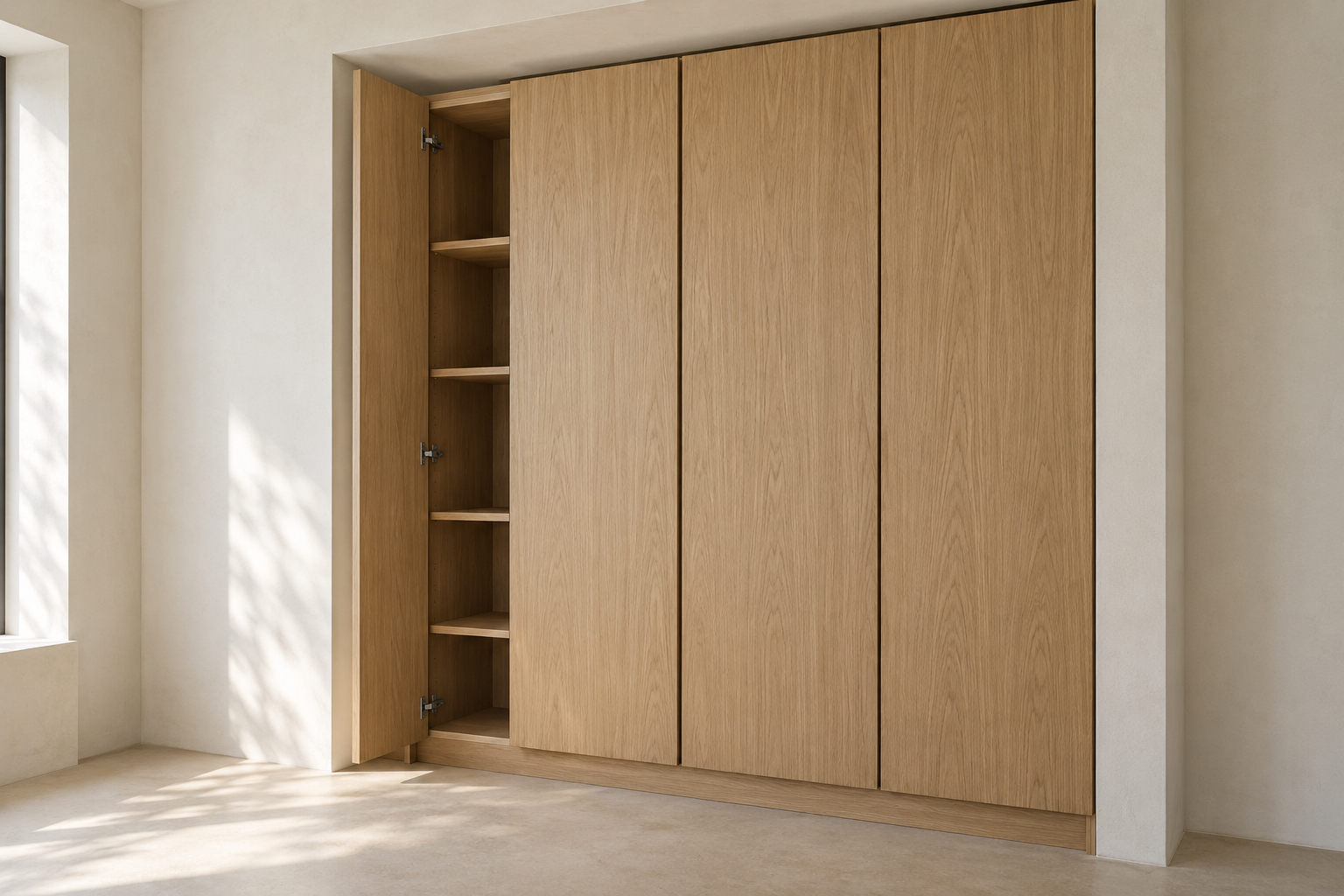
A cabinetmaker quotes an alcove. The customer has the estimate. The maker can show the fit, the materials, the finished edges and what installation includes.
A tutor can show how a session works. A small studio can show a finished project and the decisions behind it.
The page puts those things together. Someone can inspect the work, return to it and send the same link to the person deciding with them.
“I’ll send you the link.”
That should be easy to say.
Give me the real material.
Your offer. The photographs you own. The questions people ask before buying. The detail you always have to explain.
I turn that material into a page you can use.
I write the copy, choose the order and design around the work. The type, composition and images give it a face of its own. Each part earns its place by showing something or answering something.
Then I build it for desktop and phone, connect the contact form and complete the release checks we agree.
You work with the person doing the work. When the headline needs changing or an image needs more room, you speak to me.
Look at the decisions.
The cabinetmaker above is an illustrative design study. Switch between the two treatments: the example facts stay the same, while the offer, the work and the next step become easier to inspect.
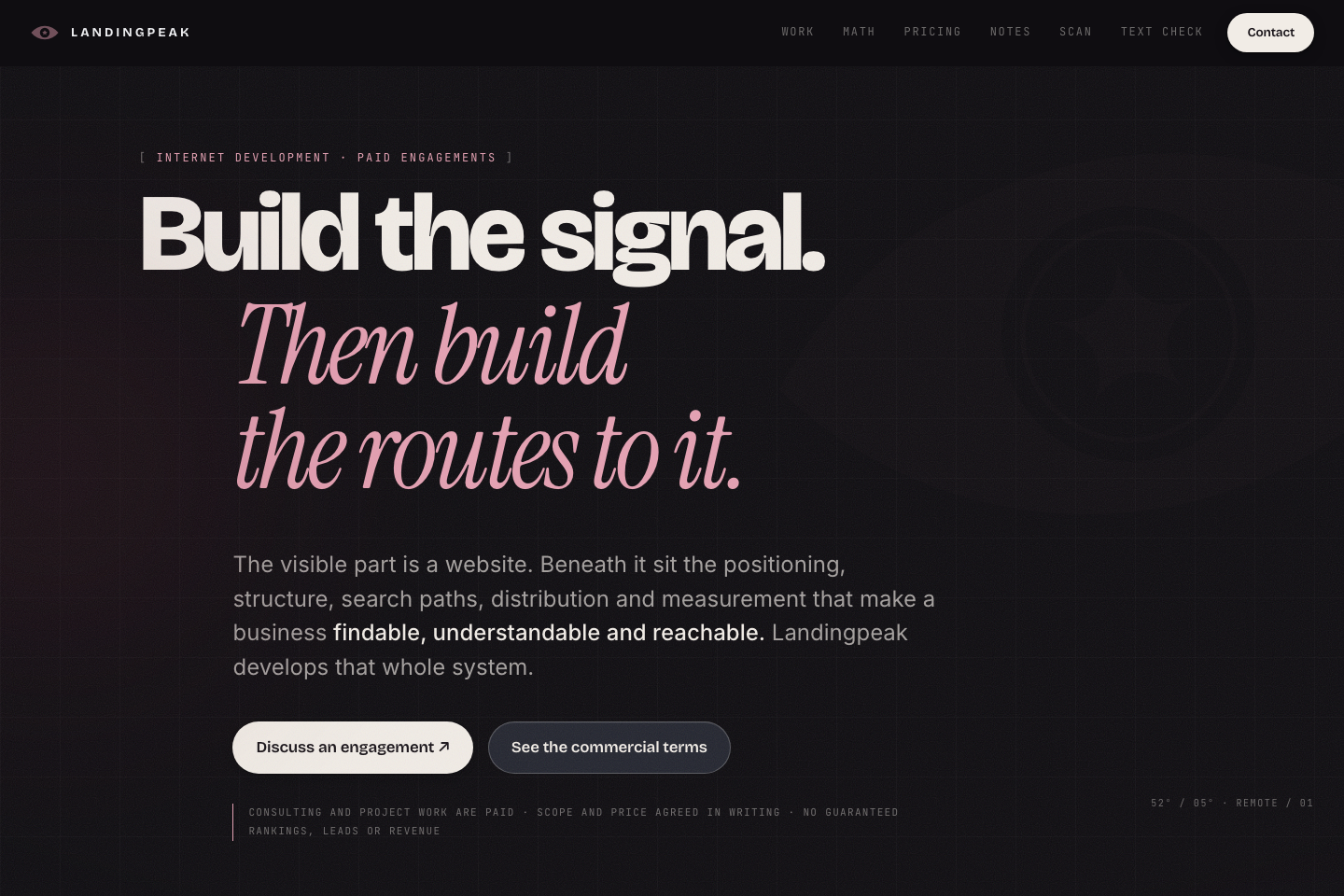
Below is LandingPeak’s own redesign, with its before, after and dated technical record. It is an owned studio project. Look at the headline, the space and the route to contact.